 Compass
Growing together
Spotting Behavioral Styles in Early Childhood (Ages 5–7)
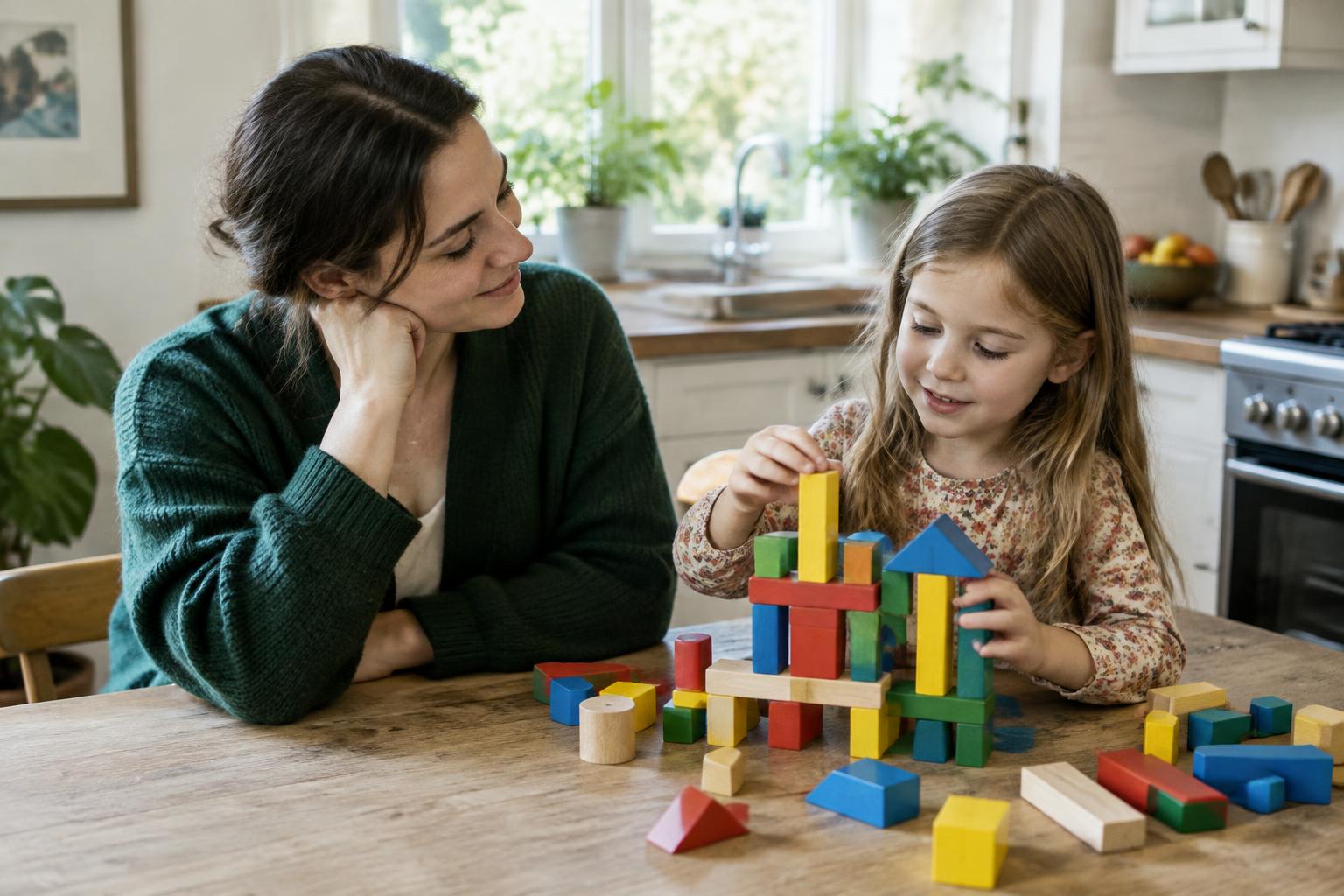
Notice patterns, not one difficult afternoon
Temperament describes patterns in emotional style and adapting to situations. The American Academy of Pediatrics highlights characteristics such as activity, approach to new experiences, adaptability and intensity. These provide a language for observation, not a list of good and bad children. [1]
A child who hangs back at a birthday party may be comfortable leading familiar play at home. Tiredness, hunger, noise and an unfamiliar group can change what adults see. Record the situation as well as the action before deciding that a pattern is consistent.
Four everyday windows into behavior
Ordinary moments often tell you more than asking a child to explain an abstract trait. Keep the observation specific and avoid comparing siblings.
- Play: Do they explore new materials, repeat a favorite activity or invite others to join?
- Transitions: What helps them move from play to getting ready?
- Frustration: Do they ask for help, pause, try again or need a break?
- Cooperation: When do sharing and taking turns become easier or harder?
Separate a growing skill from a fixed identity
Developmental research emphasizes that personality develops in context, including interactions with caregivers. Early patterns can show continuity, but they also change. An observation at six is not a final description of an adult. [2]
Instead of ‘lazy,’ say ‘starting the task is harder without a first-step prompt.’ Instead of ‘shy,’ say ‘watching first seems to help in a new group.’ These descriptions make it possible to change the situation and notice what helps.
Use what you notice to offer support
Try a transition warning, a quieter entry into group play or a small choice between two acceptable tasks. Change one thing at a time and notice whether participation becomes easier. The goal is support, not getting a child to behave like a parent or sibling.
Compass offers a parent-guided picture-question path for ages 5–7. Explore it together, leave room for the child’s own response and keep results educational. If difficulties persist or interfere with daily life, speak with a qualified child professional rather than relying on a profile.
Common questions
Can a five-year-old have a fixed personality type?
Children show recognizable tendencies, but behavior and skills are still developing. Describe patterns in context rather than assigning a permanent type or predicting an adult personality.
What if behavior differs at school and at home?
Different demands, people, routines and sensory conditions can bring out different behavior. Compare specific examples with caregivers instead of assuming one account is wrong.
Is Compass a developmental diagnosis?
No. The ages 5–7 path is a parent-guided educational reflection activity. It does not diagnose developmental conditions or replace professional assessment.
Your next step
Compass offers educational insights into personality styles and career fit, not medical or psychological advice.
Sources & further reading
- American Academy of Pediatrics — Understanding Your Child’s Temperament
- Anaya & Pérez-Edgar (2019) — Personality development in the context of individual traits and parenting dynamics
These sources inform the general discussion; they are not studies of Compass or evidence of Compass-specific outcomes. Photographs are illustrative.